Problem

Cigarette butts are the most harmful type of man-made waste to the environment. Cellulose acetate-based filters, which do not naturally decompose and contain harmful heavy metals, cause significant environmental pollution in natural habitats. About 4.5 trillion cigarette butts are thrown into the environment every year.
Cigarette butts not only pose a threat to the environment, but also cause economic losses. For example, a typical cigarette pack weighs 16-20 grams and costs the cigarette manufacturer around 3 TL. But the most expensive part is the cigarette filter. For this reason, every cigarette smoked causes not only health costs, but also environmental and economic costs.


Various methods have been developed for the recycling of cigarette butts. However, none of these methods are effective or practical. Recycling cigarette butts is a costly and laborious process. Existing recycling methods cannot recycle cigarette butts 100% and cannot be applied due to cost factors.
What is Karbonol?
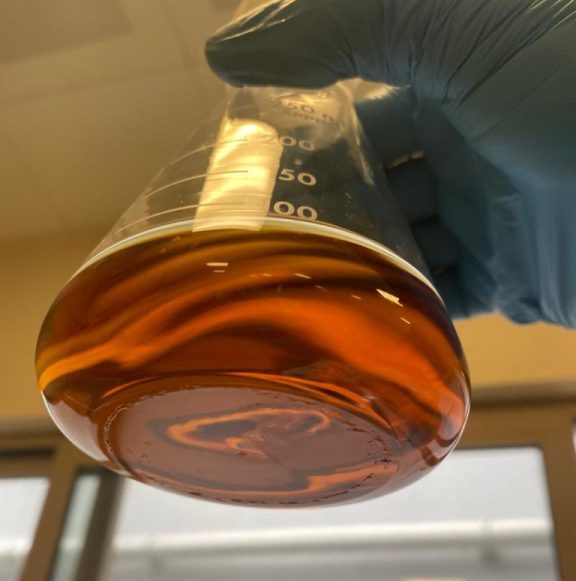
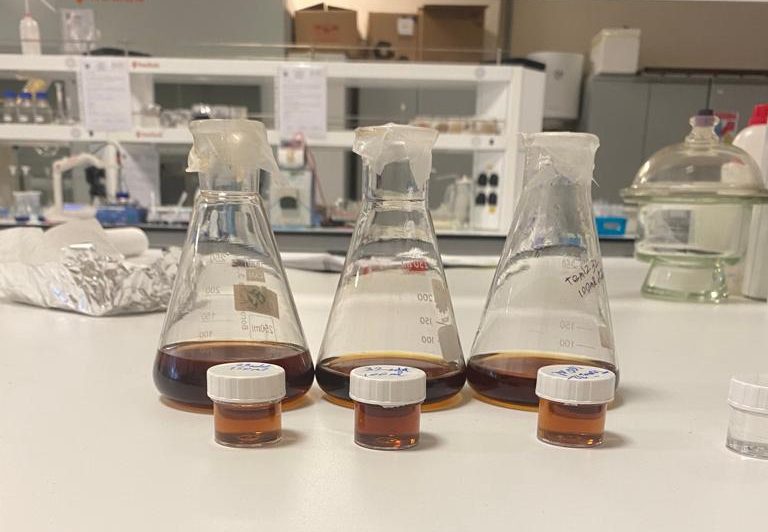
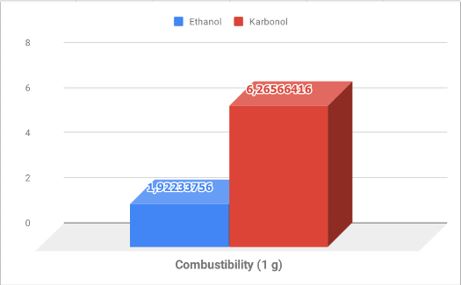
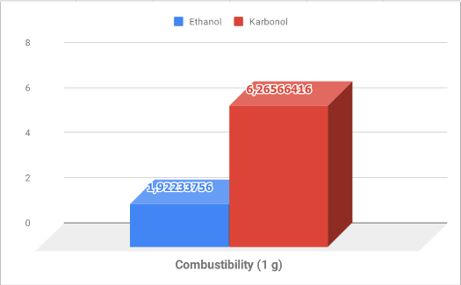
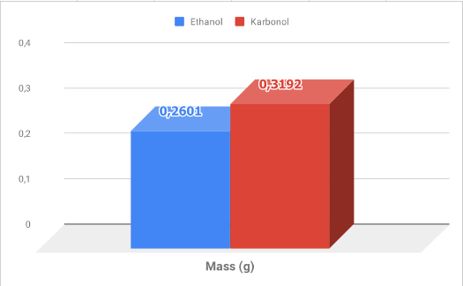
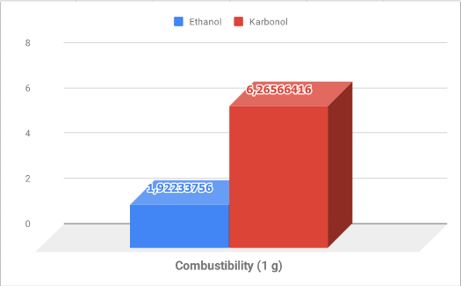
Carbonol is an ethanol solution obtained from the recycling of cigarette butt waste. It is prepared by recycling the combustible solids from cigarette butts, and when burned it provides approximately 3.6 times more energy than pure ethanol and 2.3 times more energy than gasoline.
Advantages of Karbonol
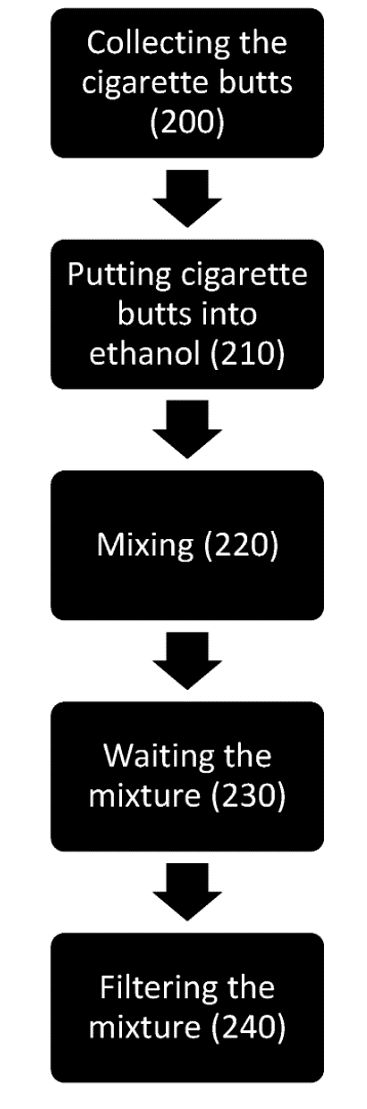
- Karbonol can be used as a renewable fuel obtained from cigarette butts.
- Karbonol production contributes to the recycling of waste by reducing the environmental impact of cigarette butts.
- Karbonol provides about 3.6 times more energy than pure ethanol. It provides 2.3 times more energy than gasoline.
- The method used to produce Karbonol is a simple and low-cost process.
- 1/4 Karbonol/Gasoline emits 2.11 times less carbon to generate the same amount of electricity.
Productivity Charts
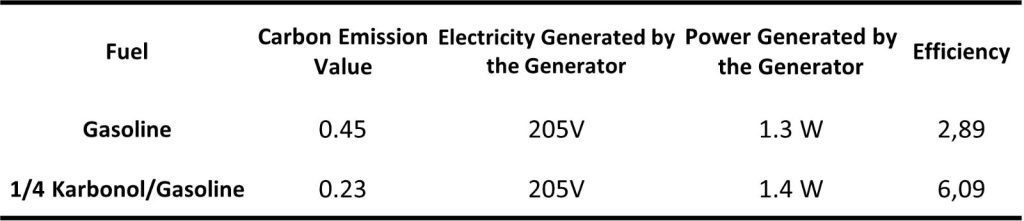
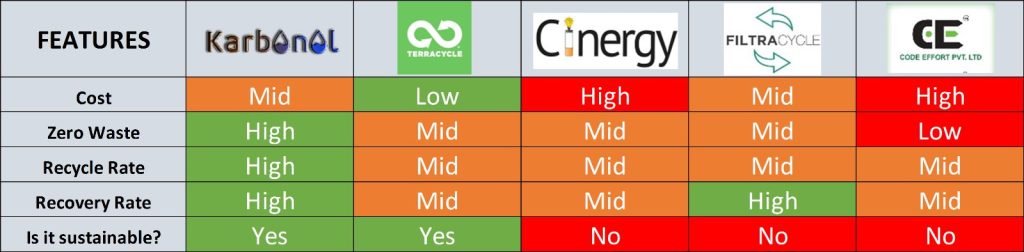
Competitor analysis